
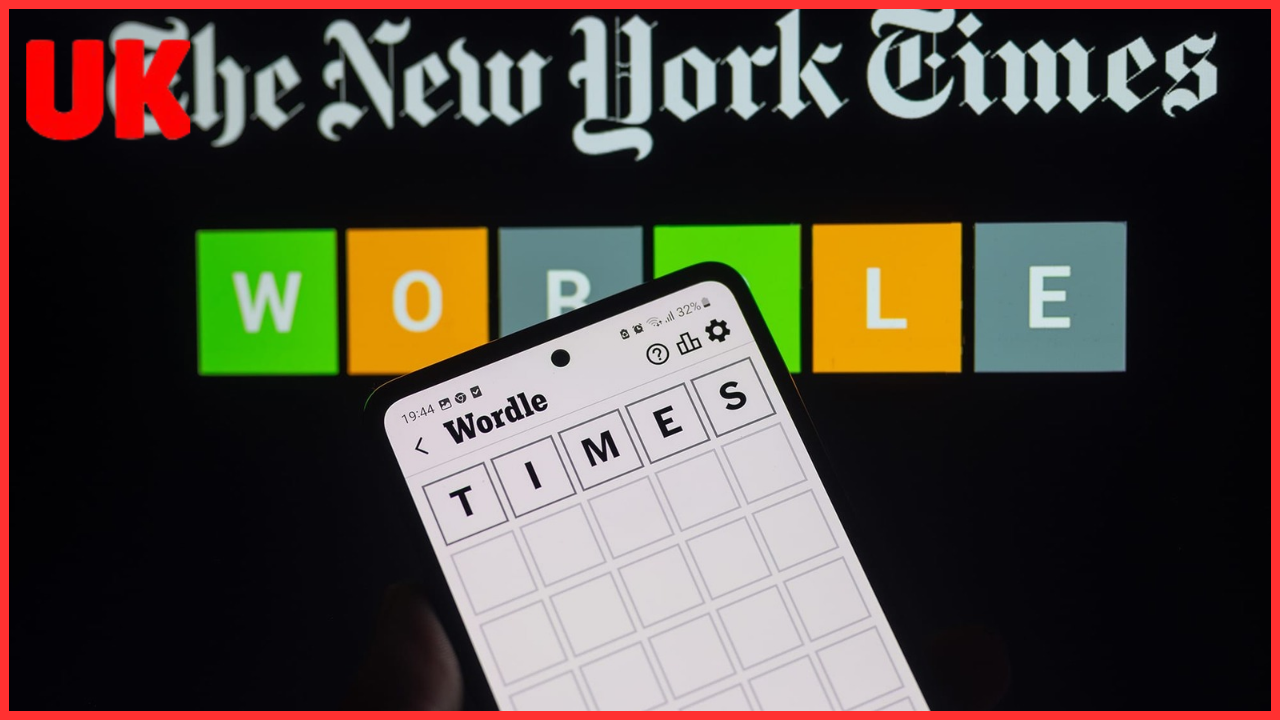
Not sure what the coloured squares mean, or why your promising guesses keep leading nowhere? This NYTimes Wordle guide explains the rules, shows how to interpret each clue and offers practical ways to approach your next puzzle without revealing today’s answer.
The challenge is straightforward: find a five-letter word in six guesses or fewer. The satisfaction comes from turning a handful of coloured tiles into a solution—and knowing when to rethink your approach.
What Is NYTimes Wordle?
NYTimes Wordle is the daily word-guessing game available through The New York Times. Each attempt produces feedback about the letters you have chosen, helping you narrow down the answer.
Unlike a crossword, you do not begin with a written definition. Your first word creates the clues. From there, the puzzle becomes a process of testing letters, recognising patterns and eliminating possibilities.
You can access the game through the or the NYT Games app. The publisher’s app listing identifies it as the official Wordle and confirms the five-letter, six-attempt format.
How to Play NYTimes Wordle
You do not need an elaborate strategy to begin. Follow these steps:
- Enter a valid five-letter word. Choose a familiar word rather than a random sequence of letters.
- Submit your guess. The tiles change colour to provide feedback.
- Read every tile. Identify correct positions, misplaced letters and letters you can eliminate.
- Choose another word using those clues. Avoid treating each attempt as a fresh start.
- Continue until you solve the word or use all six guesses.
The important habit is to pause between attempts. A useful clue can easily be overlooked when you immediately type the first word that comes to mind.
What Do the Tile Colours Mean?
The standard colour system works as follows:
| Tile colour | Meaning | How to use the clue |
|---|---|---|
| Green | Correct letter in the correct position | Keep that position when considering answers |
| Yellow | The letter appears in the answer elsewhere | Try it in another position |
| Grey | That occurrence of the letter is not needed | Usually eliminate it, while checking for repeated-letter clues |
The New York Times’ help material confirms the basic green, yellow and grey meanings.
Repeated letters need extra attention. If you guess a letter twice and only one copy receives a green or yellow tile, the other grey tile does not mean the letter is completely absent.
A Simple Wordle Example
Imagine the answer is PLANT. This is an invented teaching example, not a hint for today’s puzzle.
Your opening guess is SLATE:
| Letter | Feedback | What it tells you |
|---|---|---|
| S | Grey | S is absent |
| L | Green | L belongs in the second position |
| A | Green | A belongs in the third position |
| T | Yellow | T appears, but not in the fourth position |
| E | Grey | E is absent |
You now have the pattern _ L A _ _, with T somewhere other than fourth.
PLANT fits those clues. PLATE does not: it repeats the excluded E and leaves T in a position already shown to be wrong.
The lesson is simple: a word that looks plausible still needs to satisfy the whole board.
Choosing a Useful Starting Word
A practical opening word tests several different letters. SLATE, CRANE and TRACE, for example, each contain five distinct letters and a mixture of vowels and consonants.
Treat these as useful options, rather than guaranteed winning words. The information you receive—and how you use it—matters more than loyalty to one opener.
When choosing your first guess, consider:
- Does it test several different letters?
- Does it include both vowels and consonants?
- Is it a word you can build a clear follow-up strategy around?
An opening with repeated letters can still succeed. However, it tests fewer unique letters, which may give you less information at the beginning.
Make Your Second Guess Respond to the First
A fixed two-word routine is easy to remember, but it can overlook valuable feedback.
If your opening reveals several useful letters, explore words that fit them. If it reveals very little, consider testing a different set of letters.
Before submitting, ask: What will this word help me discover?
Wordle Strategies for Tricky Boards
Consider Repeated Letters
Words such as APPLE, LEVEL and SHEEP illustrate why you should not assume every answer contains five different letters.
If your known letters do not seem to form anything sensible, reconsider whether one might appear twice. A single green E establishes one E; it does not automatically rule out another.
Watch for Words With the Same Ending
A pattern such as _ATCH can suggest BATCH, CATCH, HATCH, LATCH, MATCH, PATCH or WATCH.
Guessing those possibilities individually may use up your remaining turns. In standard mode, an information-gathering word can help test several candidate letters at once.
For example, CHAMP tests C, H, M and P. It may help distinguish between several possible beginnings, even though it does not preserve the visible ending.
Understand Hard Mode Before Switching
Hard Mode requires subsequent guesses to use the revealed hints, including green letters in their established positions and discovered yellow letters. This restricts the information-gathering approach described above.
Try it when you enjoy working within tighter constraints. Standard mode offers more freedom to investigate possibilities.
Using Hints Without Spoiling the Puzzle
If you are stuck, decide how much help you want before opening an answer page.
Start with a broad clue, such as the word’s meaning or grammatical role. Then consider a letter hint. Reveal the answer only if you are ready to end the challenge.
The NYT Games app includes access to tips and solver discussions through its hints feature. It also offers Wordle Bot analysis, while the help centre identifies Wordle Bot as a subscription feature.
Reviewing your decisions after finishing can be useful: identify the guess that narrowed the field most, and the one that overlooked existing evidence.
Frequently Asked Questions
Is NYTimes Wordle free?
The daily Wordle is free to play. Additional features, including the official puzzle archive and Wordle Bot, are associated with paid access. Check the current NYT Games subscription details before purchasing.
Can Wordle answers contain repeated letters?
Yes. A letter can appear more than once. Read duplicate-letter feedback carefully rather than assuming a grey copy eliminates every occurrence of that letter.
Can I play previous Wordle puzzles?
Yes. The official Wordle archive is available through the NYT Games subscription offering, including in the Games app.
Is there one best Wordle starting word?
There is no opener that guarantees success. A word containing several different letters is a practical starting point, but later guesses should respond to the clues you uncover.
Do I need to download an app?
No. Wordle is available in a web browser. The NYT Games app provides another way to play on supported mobile devices.
Make Your Next Guess Count
NYTimes Wordle rewards careful observation: read every tile, remember repeated letters and choose guesses that answer a specific question.
Open the official puzzle and try one simple habit today: before submitting each word, explain to yourself why it fits—or what new information it will reveal.
Read more : Ukwordle.co.uk