
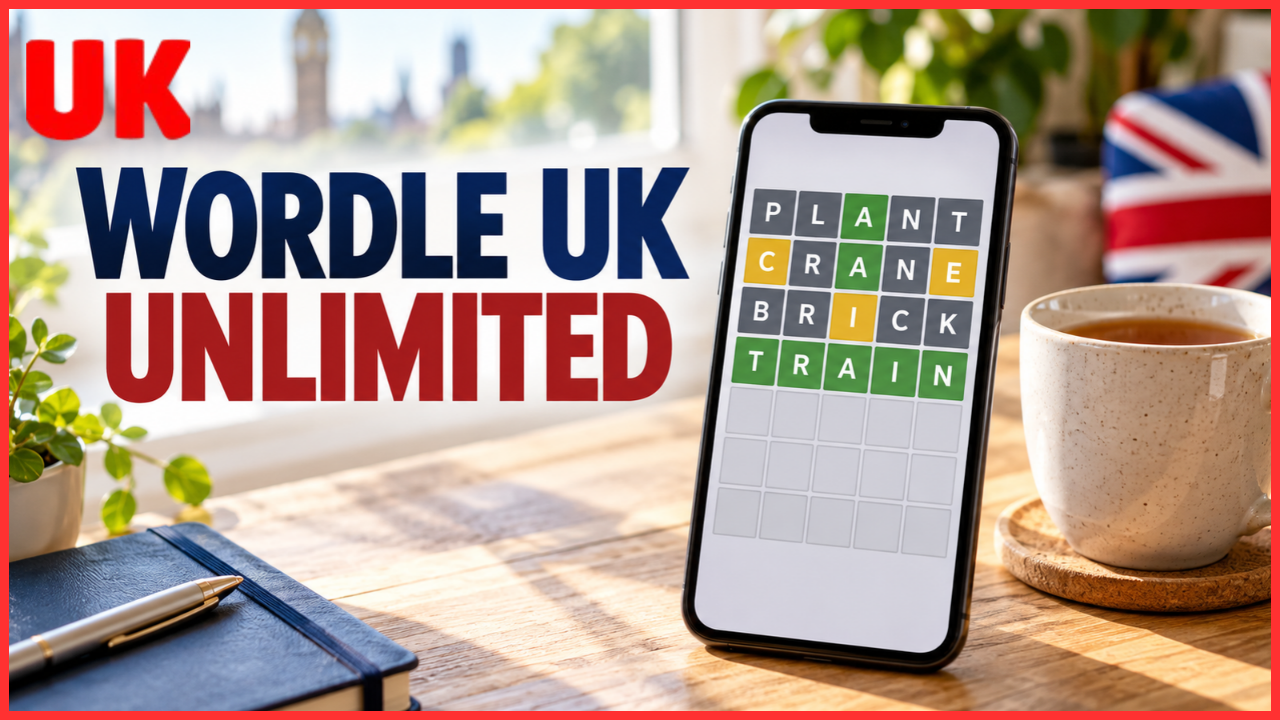
Finished your daily puzzle and wish you could have another go? Wordle UK Unlimited is a search term used to find repeat-play word games, including versions designed around British English.
This guide explains how unlimited puzzles work, what to check before choosing a UK version, and how to turn those coloured clues into better guesses.
What Is Wordle UK Unlimited?
Wordle UK Unlimited does not refer to one universally standardised game. Several websites offer puzzles under similar names, so the dictionary, settings and available features depend on where you play.
The central idea is straightforward: solve a hidden word, then start another round without waiting for the next daily puzzle. For example, Wordle-Unlimited.io describes its UK edition as a British English game with six attempts per puzzle and unlimited rounds. Another provider, WordleUnlimited.org, says its UK version includes both British and American vocabulary.
That difference matters. A “UK” label alone does not tell you exactly which spellings a game accepts.
Does Unlimited Mean Unlimited Guesses?
Usually, it means unlimited puzzles, rather than unlimited attempts at one answer.
In the UK edition described above, you still have six guesses to solve each word. Once that round ends, you can begin another. Check the instructions on your chosen website because individual versions may use different rules.
How to Play Wordle UK Unlimited
Start by reading the game’s help panel and checking its language setting. If several languages or dictionaries are available, select English (UK).
Then follow these steps:
- Enter a valid five-letter word. Choose an opening guess that tests several different letters.
- Submit your guess. Read the feedback before typing again.
- Keep correctly placed letters in position. They give your next guess a useful structure.
- Move letters that belong elsewhere. A correct letter in the wrong position still narrows the possibilities.
- Remove options that contradict the clues. Every previous row should influence your next move.
- Finish the round and review it. Before starting again, notice which clue helped—or which one you missed.
What Do the Tile Colours Mean?
The familiar Wordle colour system uses green for a correctly positioned letter, yellow for a letter that belongs elsewhere, and grey for an incorrect letter. Some games offer alternative colours, so consult their display settings.
Repeated letters need extra care. If you guess a letter twice and only one copy receives a positive clue, the grey copy can indicate that you have used that letter more times than the answer contains.
British Spelling: What UK Players Should Check
British English can affect a five-letter puzzle in ways that are easy to overlook. Consider these spelling pairs:
| British spelling | American spelling |
|---|---|
| FIBRE | FIBER |
| LITRE | LITER |
| METRE | METER |
Both forms contain five letters, but their final positions differ. If your game uses British spellings, placing the last two letters in the American order could prevent an otherwise promising guess from working.
However, providers set their own dictionaries. Some advertise a British English word list, while others describe a mixture of UK and US vocabulary. Read the specific game’s guidance before assuming either spelling will count.
Also remember that an accepted guess and a possible answer are different things. A game accepting a word does not necessarily establish that it can appear as a solution.
Practical Tips for Better Guesses
Unlimited play gives you room to experiment. The most useful practice comes from changing how you interpret clues, rather than simply completing more rounds.
Start With a Word That Tests Different Letters
Words such as SLATE, CRANE and STARE offer a mixture of vowels and consonants without repeating letters.
Treat them as useful starting options, not guaranteed winning choices. The next guess should respond to the feedback you receive.
If your opener reveals very little, test fresh letters. If it reveals several useful clues, begin building around them.
Read the Whole Board Before Submitting
A tempting word can still be a poor guess if an earlier row has already ruled it out.
Before pressing Enter, check:
- Does it preserve your confirmed letter positions?
- Does it move yellow letters away from positions already tested?
- Does it reuse a letter that the clues exclude?
- Does it account for a possible repeated letter?
This quick review can prevent avoidable mistakes.
Use a Worked Example
Imagine a practice puzzle with PLANT as its hidden answer.
You begin with SLATE. The A turns green, while L and T turn yellow. S and E turn grey.
Your next guess, TRAIL, keeps A in the middle and moves both L and T. Now R and I turn grey, while L and T remain yellow.
You have learned that:
- A belongs in the third position.
- L belongs in the word, but not in positions two or five.
- T belongs in the word, but not in positions one or four.
PLANT fits those clues. The lesson is to combine information across rows instead of reacting only to the latest result.
Think About Doubled Letters
Words such as APPLE, SHEEP and LEVEL show why repeated letters deserve consideration.
Testing different letters is useful early on, but it should not become a rigid rule. Once the clues suggest a double, explore it.
Pause When Several Answers Fit
Suppose your remaining pattern is _IGHT. Depending on the dictionary and earlier clues, several words may fit.
Write down the remaining candidates before guessing. If your version permits exploratory guesses, a word that tests several candidate letters may help distinguish them. With only one attempt left, however, you need to choose a possible answer.
Make Unlimited Practice More Useful
Give each short session one purpose. You might focus on moving yellow letters correctly, spotting doubles or checking British spelling.
After a missed puzzle, identify the specific mistake. “I put L back in a position already ruled out” gives you something useful to change next time.
Keep comparisons fair, too. Results from different websites may reflect different dictionaries, settings or answer lists. Compare your own rounds under similar conditions.
Frequently Asked Questions
Is Wordle UK Unlimited the official Wordle?
Do not assume it is. Multiple providers use similar names for their own games. One UK provider explicitly describes its version as independent and unaffiliated with The New York Times. Check the website’s ownership information.
Can I play more than once a day?
Unlimited versions are designed for repeated rounds. Wordle-Unlimited.io’s UK page specifically advertises unlimited play, although each puzzle still has its own attempt limit.
Does every UK version accept British spellings?
The exact dictionary varies. Some providers advertise British English specifically; others include both UK and US words. Check the game’s instructions rather than relying only on its name.
Why does the game reject a real word?
Its accepted-word list may exclude that spelling or word form. Check the selected language, the required word length and any published dictionary rules.
Is there one answer for everyone?
There is no single answer shared across every website using the Wordle UK Unlimited name. To compare a puzzle with someone else, make sure you are playing the same provider and mode.
Ready for Another Round?
Wordle UK Unlimited offers a way to keep playing while practising your clue-reading skills. Choose a version with clear dictionary rules, check every row before guessing, and stay alert to British spellings and repeated letters.
Read more : Ukwordle.co.uk