
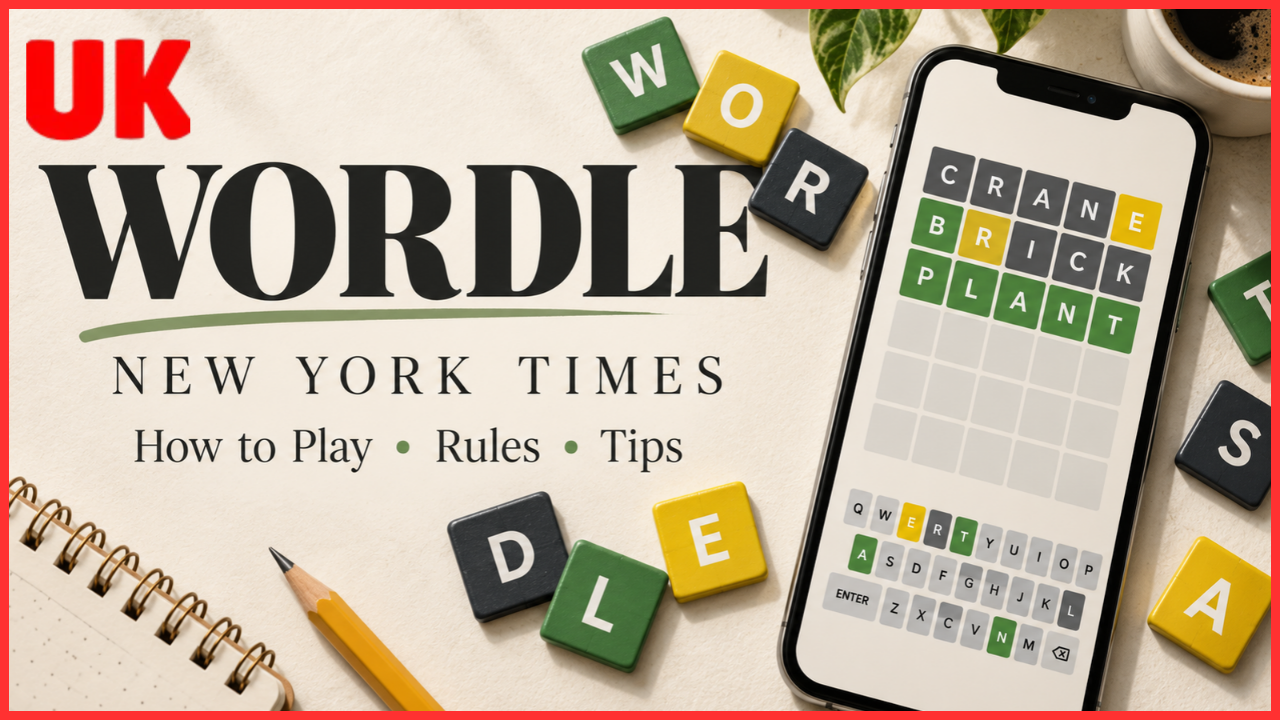
Searching for “Wordle New York Times” because you want to find the official game or understand those coloured squares? This guide explains where to play, how the clues work and how to make more useful guesses without spoiling today’s answer.
The challenge is straightforward: identify a hidden five-letter word within six attempts. The interesting part is deciding what each result tells you—and what to try next.
What Is Wordle New York Times?
Wordle is the daily word puzzle available through The New York Times. Each submitted guess produces coloured tiles that help you narrow down the answer.
You can play on the or through the NYT Games app. The daily puzzle does not require a subscription, although additional features, including the archive and Wordle Bot, require eligible subscription access.
Unlike a crossword, Wordle provides no definition to get you started. You build your own clues by testing words and interpreting the feedback.
How to Play Wordle Step by Step
You do not need a large vocabulary to understand the game. Start with these steps:
- Open the official Wordle game.
- Enter a valid five-letter word.
- Press Enter to submit it.
- Check which letters change colour.
- Use that information to choose your next word.
- Continue until you find the answer or use all six attempts.
Every accepted guess matters, so take a moment to read the entire row before typing again.
What Do the Colours Mean?
| Tile colour | Meaning | How to use the clue |
|---|---|---|
| Green | The letter is correct and correctly positioned. | Keep that position in your possible answers. |
| Yellow | The letter belongs in the answer but occupies the wrong position. | Look for words containing it elsewhere. |
| Grey | That occurrence of the letter is not needed in the answer. | Usually eliminate it, while checking for duplicate-letter feedback. |
The basic colour meanings come from the official Wordle instructions. Repeated letters need extra attention because two copies of the same letter can receive different feedback.
A Simple Worked Example
Imagine the hidden answer is PLANT and you guess SLATE. This is an illustration, not today’s solution.
Your feedback would be:
- S: grey.
- L: green.
- A: green.
- T: yellow.
- E: grey.
You now know that L and A occupy the second and third positions. T belongs somewhere other than fourth, while S and E can be excluded.
That gives your next guess a clear purpose: find a word that respects those clues.
How to Choose a Useful Starting Word
A useful opening word tests several different letters. SLATE, CRANE and TRACE, for example, each contain five distinct letters, allowing you to explore multiple possibilities immediately.
Treat these as practical options rather than guaranteed winners. An opener is only useful if you respond thoughtfully to its result.
Starting with the same word each day can make your approach more consistent. Changing it can keep the game interesting. Either approach leaves you with the same task: turn the feedback into a better second guess.
Let the First Result Shape the Second Guess
Avoid entering a fixed second word without checking the board.
If your opener reveals several useful letters, investigate arrangements containing them. If it reveals very little, consider a word that tests different letters.
Before submitting, ask: What will this guess help me learn? A word that checks several unresolved possibilities may be more useful than one that simply looks familiar.
Wordle Strategy: Make Each Row More Informative
Keep Track of Positions
A yellow letter tells you more than “this letter exists”. It also rules out the position where you placed it.
Keep a short mental record of both facts. Otherwise, it is easy to move letters around while accidentally repeating an arrangement that already failed.
Watch for Repeated Letters
Wordle answers can contain the same letter more than once. Do not assume that every answer uses five different letters.
For example, imagine the answer is APPLE and your guess is ALLEY. One L receives a yellow tile, while the other receives a grey tile: the answer contains one L, but your guess contains two.
The lesson is to read duplicate letters together. A grey copy does not necessarily eliminate every occurrence of that letter.
Avoid Guessing Similar Words Without a Plan
Suppose several words still fit your clues. Trying them one after another can use up your remaining attempts quickly.
In normal mode, you can consider a guess that tests several unresolved letters, even if it temporarily leaves out a known letter. This can help distinguish between candidates.
It still costs an attempt. When only one or two guesses remain, weigh the information gained against your chance of solving immediately.
What Does Wordle Hard Mode Change?
Hard Mode requires you to reuse revealed hints in subsequent guesses. You can find it through the game’s settings cog.
This changes how you approach an information-gathering guess. You must retain the clues already uncovered, which limits the words available to test.
Beginners may find normal mode more flexible while learning. Once interpreting the board feels comfortable, Hard Mode offers a different challenge.
Common Mistakes That Waste Guesses
Small oversights can matter more than an unfamiliar answer. Watch for these habits:
- Rushing after a promising result: Check every tile before committing.
- Forgetting yellow positions: A correct letter still needs the right location.
- Rejecting repeated letters: Consider doubles when the pattern supports them.
- Reusing excluded letters accidentally: Review earlier rows and the keyboard.
- Opening an answer page too early: Try a gentle hint first if you want to preserve the challenge.
A brief pause before pressing Enter often helps you notice a contradiction.
Frequently Asked Questions
Is Wordle Free to Play?
Yes. The daily Wordle is available without a subscription. The archive and Wordle Bot require eligible subscriber access.
When Does a New Wordle Come Out?
The daily puzzle refreshes at midnight in your local time zone. Finish before the changeover if you want to complete that day’s game.
Can I Play Previous Wordle Puzzles?
Yes. Eligible NYT subscribers can access the official Wordle archive through the website or Games app.
What Is the Best Wordle Starting Word?
There is no opening word that guarantees a win. Choose a word that tests several different letters, then adapt your next guess to the feedback.
Can Wordle Answers Have Double Letters?
Yes. Repeated letters are possible, so assess how each copy is marked rather than assuming all five letters must differ.
Turn Today’s Clues Into a Better Next Guess
The most useful approach to Wordle New York Times is to read carefully, track letter positions and give each guess a purpose. A familiar word is not always the most informative choice.
Open the official game, choose your starter and pause after each result. Before submitting another word, check that it fits what you already know.
Read more : Ukwordle.co.uk