
Choosing the right internal door size can make a big difference when renovating, replacing an old door, or planning a new room. While UK internal doors come in several sizes, some dimensions are much more common than others.
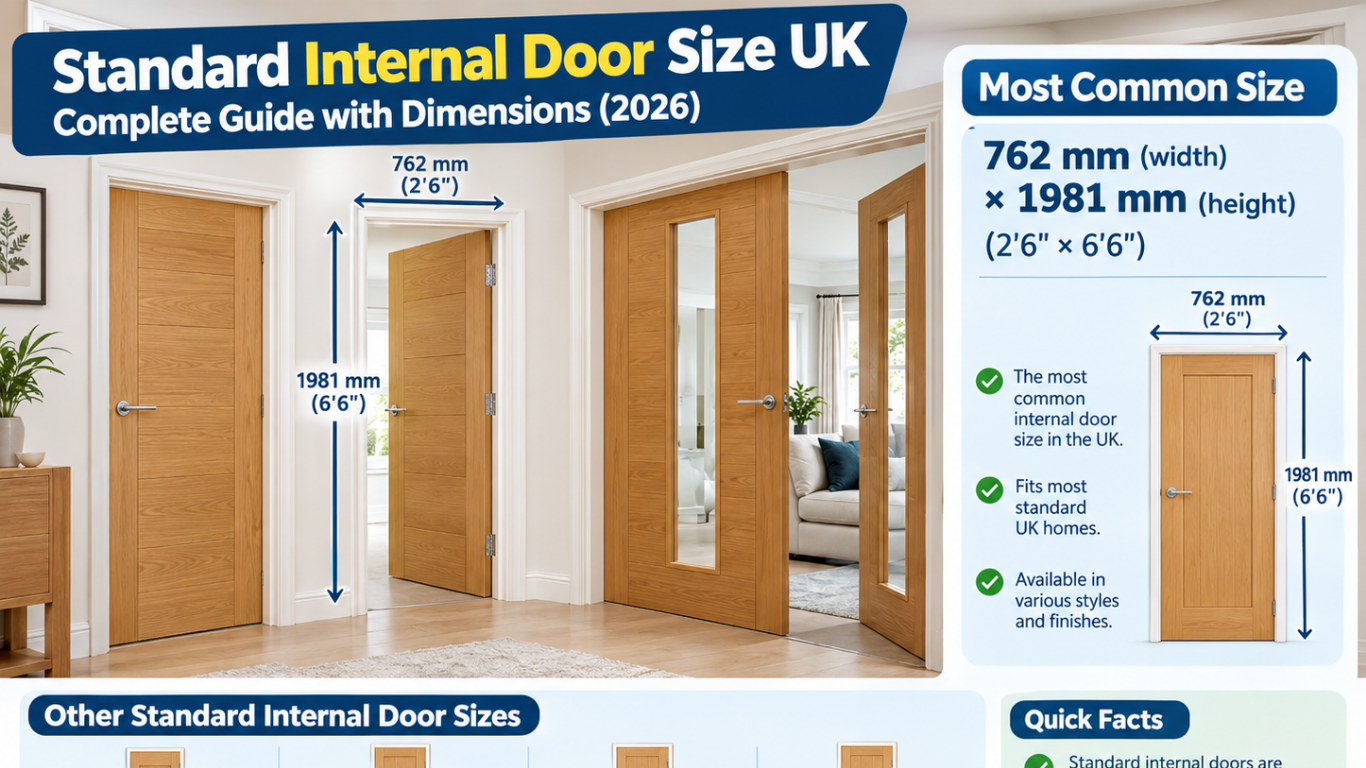
If you are searching for the standard internal door size UK, the most commonly encountered traditional size is around 762mm wide × 1981mm high. However, internal doors are also available in narrower, wider, and modern metric sizes.
This complete 2026 guide explains standard internal door dimensions, door thickness, common sizes, measuring methods, and the difference between a door leaf and the actual opening.
Quick Guide to Standard Internal Door Sizes UK
| Door Width | Door Height | Approx. Imperial Size | Common Use |
|---|---|---|---|
| 457mm | 1981mm | 18 × 78 in | Small cupboards |
| 533mm | 1981mm | 21 × 78 in | Cupboards and small spaces |
| 610mm | 1981mm | 24 × 78 in | Small rooms and utility areas |
| 686mm | 1981mm | 27 × 78 in | Bathrooms and bedrooms |
| 762mm | 1981mm | 30 × 78 in | Common internal rooms |
| 838mm | 1981mm | 33 × 78 in | Wider rooms and easier access |
| 726mm | 2040mm | Approx. 28½ × 80¼ in | Metric door systems |
| 826mm | 2040mm | Approx. 32½ × 80¼ in | Modern metric openings |
| 926mm | 2040mm | Approx. 36½ × 80¼ in | Wider metric openings |
These measurements generally refer to the door leaf, not the complete structural opening.
What Is the Standard Internal Door Size UK?
There is no single size that applies to every internal door in the UK. Different homes, manufacturers, regions, and building periods use different dimensions.
For traditional UK doors, 762mm × 1981mm is one of the most commonly encountered internal door sizes. It is often used for bedrooms, living rooms, dining rooms, and other general-purpose spaces.
Other widths are available when a smaller or wider doorway is required. For example, a 610mm door may suit a compact space, while an 838mm door provides a wider passage.
Modern metric door systems can also use dimensions such as 2040mm in height, with several different widths available.
Therefore, before ordering a replacement door, it is important to measure the existing door and opening rather than assuming that the property uses the most common size.
Standard Internal Door Width UK
The width of an internal door is usually the first measurement people consider.
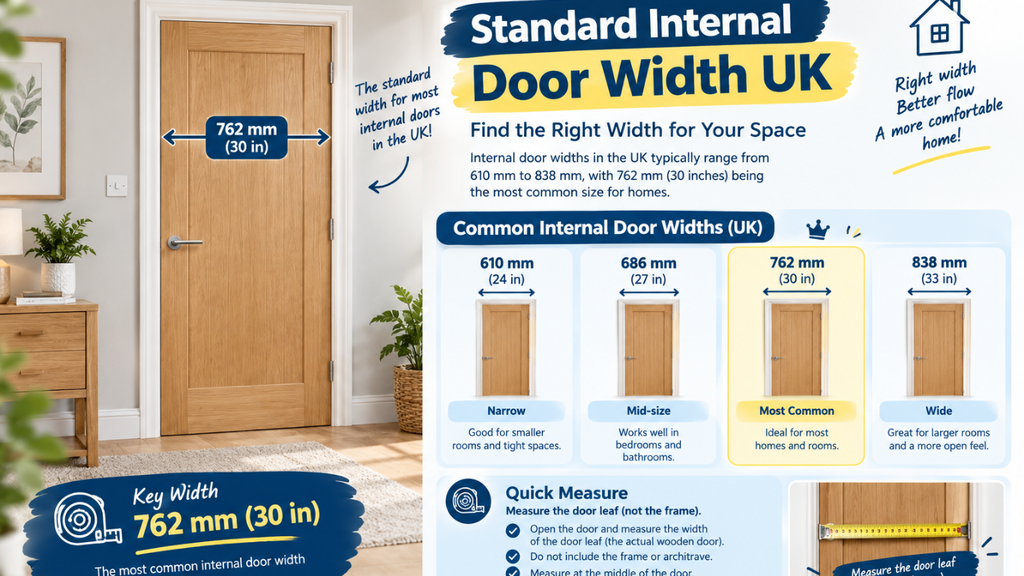
Common traditional widths include:
- 457mm – suitable for narrow cupboards
- 533mm – useful for smaller openings
- 610mm – compact internal door
- 686mm – common for smaller rooms
- 762mm – widely used general-purpose size
- 838mm – wider internal doorway
The 762mm width is particularly important when researching the standard internal door size UK because it is a familiar traditional dimension.
However, wider does not automatically mean better. The correct size depends on the existing frame, available wall space, room layout, furniture movement, and the intended use of the doorway.
Standard Internal Door Height UK
A traditional internal door height is commonly around 1981mm, which is approximately 78 inches.
This height appears across many traditional UK internal door sizes, including:
- 610 × 1981mm
- 686 × 1981mm
- 762 × 1981mm
- 838 × 1981mm
Modern metric systems may instead use a door height of approximately 2040mm.
This difference is particularly important when replacing doors in newer properties or when installing doors from a metric range. A 2040mm door should not simply be assumed to fit an opening designed around a 1981mm door.
How Thick Is a Standard Internal Door?
Door thickness is another measurement that is often overlooked.
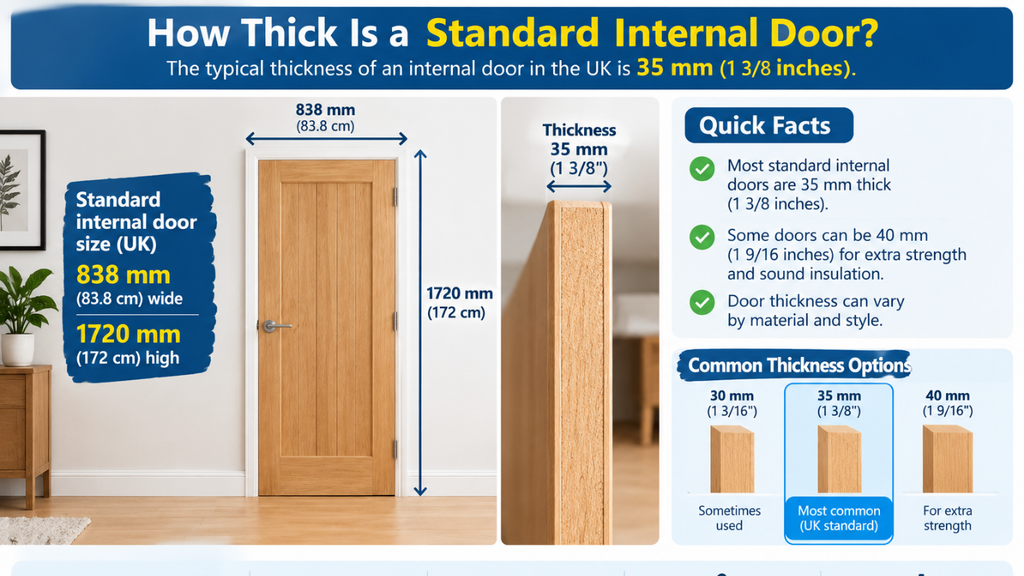
A traditional internal door is commonly around 35mm thick, although other thicknesses are available. Modern metric door ranges can also include doors around 40mm thick.
Thickness can affect:
- Hinges
- Door frames
- Latches
- Handles
- Architraves
- Door stops
- The final clear opening
If you are replacing an existing door, measure its thickness before purchasing the replacement.
A new door that is significantly thicker than the original may require compatible hinges or adjustments to the frame.
Imperial vs Metric Internal Door Sizes
UK homes contain a mixture of traditional and metric door dimensions.
Older and traditional door ranges commonly use measurements such as:
762 × 1981mm
Modern metric ranges may use sizes based around:
2040mm height
This is one reason why two homes in the same area can have noticeably different door dimensions.
Metric sizes are particularly useful when designing a new property or replacing a complete door-and-frame system. Traditional imperial-sized doors, however, remain widely available for replacement projects.
The best approach is to measure the existing installation before deciding which size you need.
Quick Measure: How to Measure an Internal Door
If you are replacing an existing door, measuring it correctly can prevent an expensive mistake.
1. Measure the Width
Measure the door leaf from one vertical edge to the other.
Take the measurement at the:
- Top
- Middle
- Bottom
If the measurements differ slightly, record all three. An older door may not be perfectly square.
2. Measure the Height
Measure from the top edge of the door to the bottom edge.
Again, check more than one point if possible.
3. Measure the Thickness
Use a tape measure or ruler to measure the thickness of the door.
Traditional internal doors are often around 35mm, but do not rely on this assumption.
4. Check the Frame
If you are replacing the complete door set, measure the frame opening as well.
The door leaf measurement and the opening measurement are not the same thing.
Door Leaf Size vs Door Opening Size
This is one of the most important things to understand when buying an internal door.
The door leaf is the actual moving door.
The door opening is the space within the frame that the door closes against.
For example, a door described as 762mm wide does not mean that the entire doorway will provide exactly 762mm of usable space.
The frame, hinges, door stops, seals, and other components take up some of the available space.
This is why you should never order a replacement door based only on the width of the wall opening.
Standard Internal Door Size UK for Accessibility
Accessibility requires more than simply choosing a wider door.
A wider door leaf can provide additional space, but the important measurement is often the effective clear opening after the door, frame, hinges, and hardware are taken into account.
For certain building situations, UK accessibility guidance specifies minimum effective clear widths depending on the approach to the doorway and the type of building.
This means an 838mm door leaf should not automatically be described as an accessible doorway. The final clear opening and surrounding layout need to meet the relevant requirements.
For a new build or major alteration, the applicable building regulations should always be checked.
Why Older UK Homes Have Different Door Sizes
Older properties can contain internal doors that do not match modern standard sizes.
There are several reasons for this.
Different Building Practices
Older homes were built using construction methods and dimensions that may differ from modern manufacturing standards.
Previous Alterations
A doorway may have been changed during an earlier renovation. The original frame could have been removed or modified.
Non-Standard Openings
Period properties sometimes have unusually narrow or short doorways. A standard modern door may therefore require the frame or opening to be adjusted.
Regional Differences
Door sizes can also vary between different parts of the UK and between traditional and metric construction systems.
Because of these differences, measuring an existing door is especially important in older properties.
What If Your Door Opening Is Not a Standard Size?
Do not worry if your doorway does not match a standard door dimension.
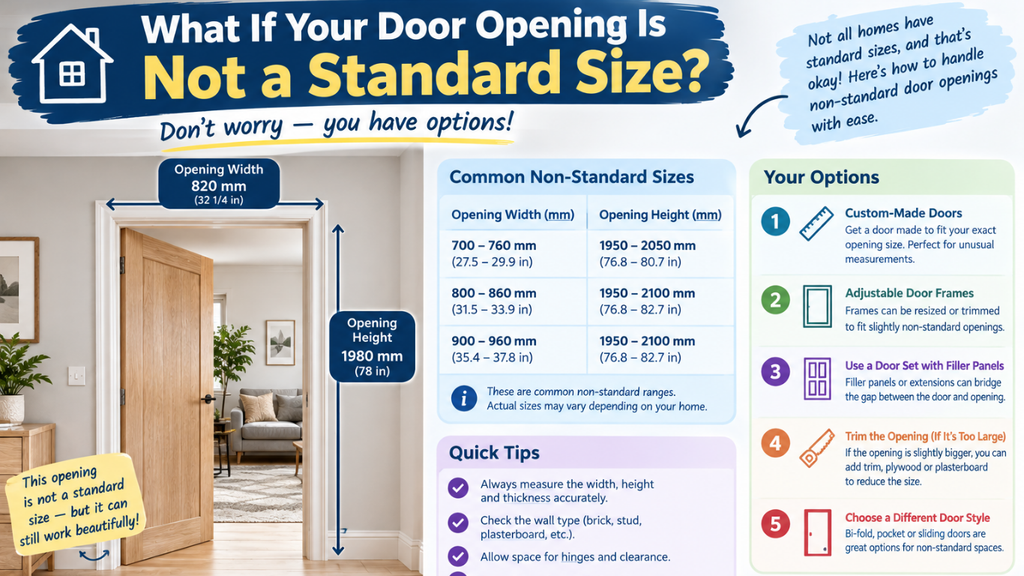
You generally have several options.
Option 1: Choose a different door size
A manufacturer may offer a smaller or larger door that fits the existing opening.
Option 2: Trim the door
Some doors can be trimmed by a specified amount, but the manufacturer’s instructions must be followed. Excessive trimming can damage the door or affect its structure.
Option 3: Modify the frame
A carpenter can sometimes adjust the frame to accommodate a different door size.
Option 4: Order a made-to-measure door
For unusual openings, a bespoke door may provide a better solution.
Common Mistakes When Buying an Internal Door
Assuming Every UK Door Is the Same Size
There are many standard and commonly available dimensions.
Measuring Only the Wall Opening
The opening does not tell you the exact door leaf size you need.
Forgetting Door Thickness
A different thickness can affect hinges and the frame.
Ignoring the Existing Frame
A replacement door must work with the existing frame if you are not replacing the complete door set.
Measuring Only Once
Older doors can be slightly uneven. Take measurements at several points.
Standard Internal Door Size UK: Quick Reference
For a traditional UK internal door, 762 × 1981mm is one of the key sizes to remember.
However, the right door for your home may be:
- 610 × 1981mm
- 686 × 1981mm
- 762 × 1981mm
- 838 × 1981mm
- Or a modern metric size around 2040mm high
The correct choice depends on your existing frame, opening, room layout, and the type of door installation.
Final Measurement Checklist
Before ordering your new internal door, check:
- Width: Measure the door leaf at several points.
- Height: Measure from top to bottom.
- Thickness: Check the existing door thickness.
- Frame: Measure the frame if it is also being replaced.
- Opening: Do not confuse opening size with door leaf size.
- Hinges: Check the hinge positions and side.
- Clearance: Make sure the finished door can open properly.
- Accessibility: Check effective clear opening requirements where relevant.
Final Thoughts
The standard internal door size UK is not one universal measurement. Traditional doors commonly use a height of 1981mm, with 762mm width being one of the most familiar general-purpose sizes. Wider, narrower, and modern metric options are also widely used.
For a straightforward replacement, accurate measuring is more reliable than simply choosing a door labelled “standard.” Check the width, height, thickness, frame, and opening before ordering. This simple process can help you choose a door that fits correctly and avoids unnecessary alterations.