
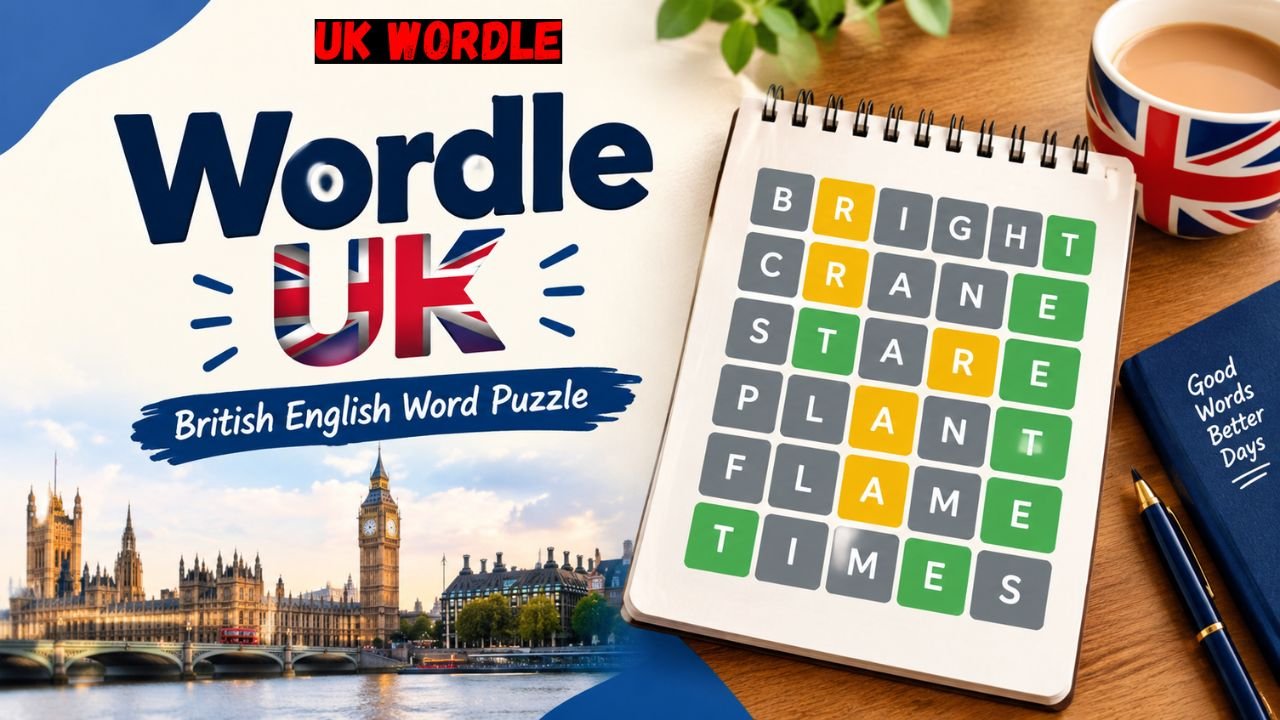
There are very few games in internet history that have managed to unite an entire nation around a grid of coloured squares. Wordle did exactly that. From the morning commute to the office break room, from Twitter feeds to family group chats, the daily word puzzle became a cultural touchstone that millions of British players adopted as part of their daily routine. But the story of Wordle UK is more than just a viral gaming trend. It is the story of a Welsh software engineer who built something small and personal, and accidentally changed how the world spends its mornings.
Who Created Wordle and Why It Matters to the UK
Welsh engineer Josh Wardle created Wordle, naming it with a play on his own last name. He originally built it for his partner, who loved word games, before sharing it with his family group chat. That detail is not a footnote in the Wordle story — it is the entire reason the game works the way it does. Wardle designed something for a specific person, with specific constraints, and that intimacy turned out to be its greatest strength.
Wardle lives in Brooklyn but grew up in Llanddewi Rhydderch, near Abergavenny in Wales. He attended King Henry VIII School in Abergavenny before going on to study Media Arts at Royal Holloway, University of London. For British players, this Welsh origin gives the game an unmistakable sense of local ownership, even as it became a global phenomenon eventually controlled by an American media giant.
From a Personal Webpage to a National Obsession
Wardle published Wordle to a personal subdomain in October 2021. The launch was quiet — no press release, no social media campaign. The game lived at powerlanguage.co.uk/wordle/ and was shared informally among his friends and family. The .co.uk domain was not a deliberate British branding exercise. It simply reflected the fact that Wardle, despite living in New York, had built his personal website under a UK domain — the name “Power Language” being his own creative handle.
On November 1, 2021, Wordle had 90 players. By early January 2022, it had over 300,000. The growth was not driven by advertising or a marketing budget. It was driven by the game’s share mechanic — the now-iconic grid of grey, yellow and green squares that players could post to social media without spoiling the answer. That format spread the game faster than any campaign could have managed.
How Wordle Works
The rules are straightforward. Players have six attempts to guess a hidden five-letter word. After each guess, the game provides colour-coded feedback: green tiles indicate a correct letter in the correct position, yellow tiles mean the letter is in the word but placed incorrectly, and grey tiles signal that the letter does not appear in the word at all. The puzzle is the same for every player worldwide on a given day, which creates a shared experience that fuels daily conversation.
From an initial list of around 12,000 five-letter English words, many too obscure for a fair game, Wardle and his partner Palak Shah narrowed the eligible answers down to approximately 2,500 words — enough to last almost seven years. The decision to limit the game to one puzzle per day was equally deliberate. Wardle described it as enforcing a sense of scarcity, drawing inspiration from the New York Times’ own Spelling Bee puzzle. That scarcity kept players returning without burning out.
The New York Times Acquisition
On January 31, 2022, The New York Times bought Wordle from Wardle for a price reported as in the low seven figures. The Times absorbed it into their Games section, alongside the Crossword and the Spelling Bee. Wardle has said publicly that he was relieved. The success had become disorienting, the upkeep was real, and he never wanted Wordle to be his job.
For many British players, the acquisition felt like a loss of something local. The game had lived at a .co.uk address, been created by a Welshman, and had found a particularly devoted audience in the UK. The powerlanguage.co.uk link still redirects to the new platform — a nostalgic reminder of the game’s humble beginnings. The transition was smoother than many feared, with the Times pledging to keep the game free to play, though the word list was reviewed and some entries were quietly adjusted in the months that followed.
The Great Spelling Debate
No topic inflamed British Wordle players quite like the question of spelling. The furore erupted when the game used “FAVOR” as its daily answer — a five-letter American spelling that left British players, who would naturally reach for “FAVOUR,” at a disadvantage. Players vented across social media with comments ranging from outraged to theatrical, and the term “British English” began trending on Twitter in the United Kingdom as complaints flooded in.
The controversy was so widespread that YouGov commissioned a poll asking over 1,000 players whether they were aware Wordle used British or American English. The survey revealed that over half of players had no idea the game operated on American vocabulary conventions. Wardle’s own explanation is disarmingly simple. He made the game for his partner, who is American, and the word list reflects her frame of reference rather than his Welsh upbringing. As he said in one interview: she was very clear about it — “I’m American. You made the game for me.”
The spelling controversy had a lasting cultural aftershock. The Cambridge Dictionary named “homer” its word of the year for 2022, crediting disgruntled Wordle players whose winning streaks were ended by the unfamiliar American English term. The word was searched for nearly 75,000 times during the first week of May when it appeared as a Wordle answer, with 95 percent of those searches coming from outside North America. The American spelling of “humor” caused the second highest spike in Cambridge Dictionary searches that same year.
When Does Wordle Reset for UK Players
One of the most practical questions British players ask about Wordle concerns timing. Unlike other New York Times games that reset at a fixed server time, Wordle resets at midnight in each player’s local timezone. For players in the UK, that means a new puzzle becomes available at midnight GMT during winter months, and at 1:00 AM during British Summer Time. The most dedicated players can therefore access the next day’s challenge in the early hours of the morning.
This local-time reset has a community dimension. Because every British player receives the same puzzle at the same moment, conversations about the day’s word can begin in earnest from midnight onwards, creating a rolling social event that plays out across the country each morning. A countdown timer within the game itself shows exactly how long until the next puzzle arrives, which has only deepened the daily ritual for habitual players.
The Spin-Off Culture Wordle Inspired in Britain
The success of Wordle triggered an explosion of imitations and variations, many of which found loyal audiences in the UK. Geography-based guessing games, number puzzles, music identification challenges, and theme-specific word games all drew on the same daily-puzzle format that Wardle had pioneered. As of 2026, Wordle remains one of the most-played daily games on the internet, now part of a broader New York Times puzzle ecosystem alongside the Crossword, Spelling Bee, Connections, and Strands. Each of those games has built a following in Britain, partly because Wordle introduced British audiences to the appeal of a daily commitment to a short, satisfying puzzle.
What Makes Wordle Stick
Beyond the mechanics and the cultural controversy, the endurance of Wordle as a daily habit for millions of British players reflects something deeper about how the game was built. There are no notifications pushing you back in, no lives to refill, no leaderboard pressuring performance. The game simply waits for you each morning and gives you one chance to solve it. Wardle responded to demands for extra features by carefully choosing which requests to ignore. The result was a game that stayed true to its original vision even as it grew from 90 players to millions.
That restraint is what makes Wordle genuinely different from the broader landscape of mobile gaming, which tends toward compulsion rather than enjoyment. A YouGov survey of Wordle players in Great Britain found that female players were particularly dedicated, with 67 percent playing every day. Those numbers reflect a game that had embedded itself into daily life rather than simply going viral and fading.
Wordle UK Today
More than four years after its quiet launch on a Welsh engineer’s personal website, Wordle remains a fixture of British morning culture. In 2026, Wardle himself released a new game called Parseword, based on cryptic crosswords, which he described as a gradual on-ramp for those new to them. The creator has moved on, but the game he built has taken on a life entirely its own.
For British players, Wordle occupies a particular place. It was born from Welsh roots, briefly wore a .co.uk address, and sparked some of the most heated national debate about language that social media had seen in years. The FAVOUR versus FAVOR argument may seem trivial in isolation, but it revealed how deeply British audiences had invested in a game they genuinely felt was theirs. That sense of ownership, however complicated, is not something most word games ever manage to earn.
Read More: Free Things to Do in Bath on a Budget: Best Affordable Experiences